Preventing Disaster Risk and Escorting High-quality Development —— CCTV Lifeline broadcast a special program on May 12th National Disaster Prevention and Mitigation Day
Do you know about natural disasters?

Earthquakes, mountain torrents, mudslides, typhoons, floods, blizzards, forest fires … … These natural disasters happen every year. When a serious disaster comes, it will destroy a city in an instant and make many people lose their homes, even their relatives.

May 12, 2023 is the 15th National Disaster Prevention and Mitigation Day. The theme of this year is "Preventing disaster risks and escorting high-quality development". Since the 18th National Congress of the Communist Party of China, China has put forward a series of new ideas and concepts on disaster prevention, mitigation and relief. The Opinions of the Central Committee of the Communist Party of China and the State Council on Promoting the Reform of the System and Mechanism of Disaster Prevention, Mitigation and Relief put forward that "to promote the reform of the system and mechanism of disaster prevention, we must firmly establish the concept of disaster risk management and comprehensive disaster reduction, adhere to the combination of prevention first, prevention and rescue, adhere to the unity of normal disaster reduction and abnormal disaster relief, and strive to realize the transformation from focusing on post-disaster relief to focusing on pre-disaster prevention".

In order to find out the hidden dangers of natural disasters in various parts of China, the first national comprehensive risk survey of natural disasters will be carried out in 2020 with the consent of the State Council. In three years, with the participation of nearly 5 million professional and technical personnel from various regions, the nationwide census has achieved initial results.

From 2020, reporters from Lifeline went to Fujian, Jiangxi, Shandong, Zhejiang and other places for follow-up reports. On May 12th and 13th, two episodes of National Disaster Prevention and Mitigation Day special program "Data Empowering to Protect Peace" will be broadcast continuously in the Lifeline column of CCTV-12.

Take precautions and be precise first.

Arrange emergency equipment so that the distress information is no longer blocked.

Fujian province is surrounded by mountains on three sides and faces the sea on one side. There are many kinds of natural disasters and they are prone to occur frequently. Once disasters occur, the disaster situation should not be underestimated.

Typhoon, rainstorm, flood, mountain torrents and mudslides, as coastal areas, more than 30 coastal counties in Fujian Province are frequently affected by marine disasters. Villagers have lived here for generations. How to prevent disasters to make them live and work in peace and contentment?
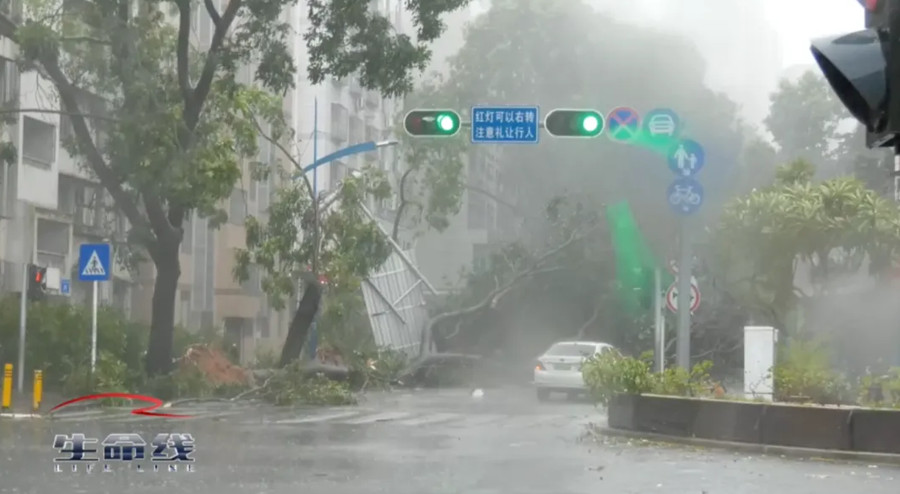
Since the first national comprehensive risk survey of natural disasters was carried out, the emergency department has collected and adopted the data of all the population and housing disaster-bearing bodies in 33 coastal counties, investigated and summarized the historical data of disasters, and calculated the elevation of coastal seawalls in the whole province with reference to relevant data, so as to help the staff to divide the dangerous areas more accurately and let the people prepare for danger avoidance in advance.
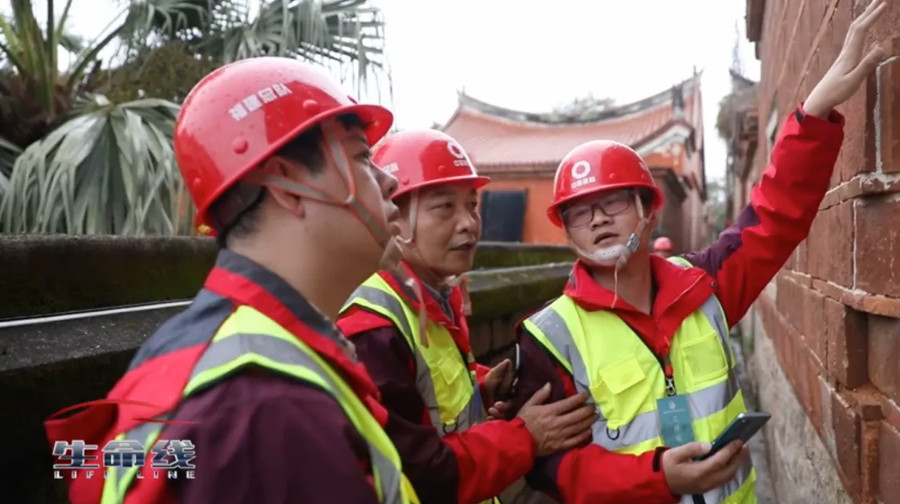
In addition to marine disasters, flood waterlogging caused by heavy rain is also one of the major natural disasters faced by Fujian Province. Whenever the flood season comes, typhoons are swept by heavy rain. The flash floods caused by heavy rain will not only endanger the safety of villagers’ lives and property, but even more frightening is that some remote villages will be lost, and rescue work cannot even be carried out.

In order to solve this problem, the Fujian Provincial Party Committee and the provincial government equipped 3,550 high-risk areas and villages with high-risk mountain torrents with satellite phones. The emergency satellite phone has both mobile and fixed terminals, and the system has its own satellite search function, which can be used in bad weather and without public network. Through this census, satellite phones have been accurately put into every remote and high-risk village, effectively solving the problems of difficulty in asking for help and being rescued in these areas. Not only that, Nan ‘an, Quanzhou, which is located in the southeast coast, is affected by extreme weather all the year round. After the first national comprehensive risk survey of natural disasters was carried out, Nan ‘an City set up a total of 2,259 broadcasting points. Based on the refined data obtained from the survey, in 2023, the city will add 43 community emergency broadcasting points, and extend to cover more than 50 natural villages in the city, achieving 100% coverage of administrative villages and communities in the city.

The smart emergency command platform issued an early warning at the first time.
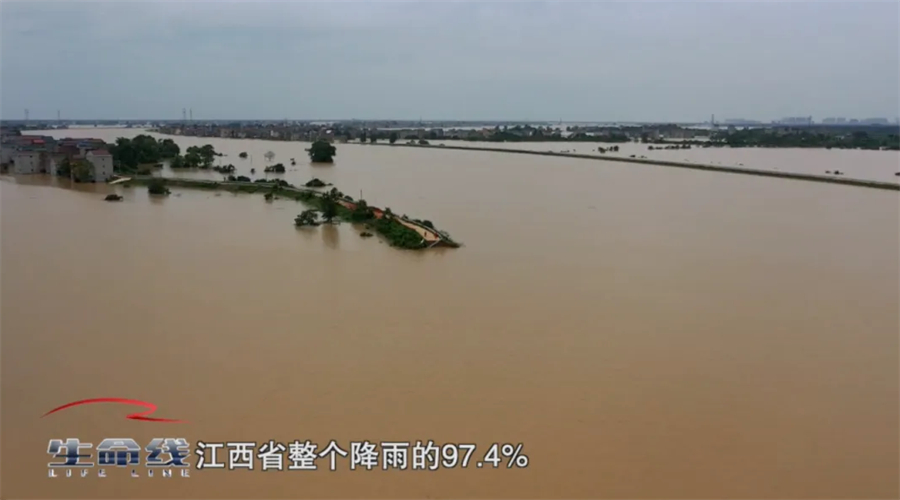
Jiangxi Province is one of the provinces suffering from serious natural disasters in China, with an average annual direct economic loss of more than 10 billion yuan. There are more than 2,400 rivers in the province, and the forest coverage rate ranks second in the country. Frequent natural disasters have a great impact on the production, life and economic development of local people.
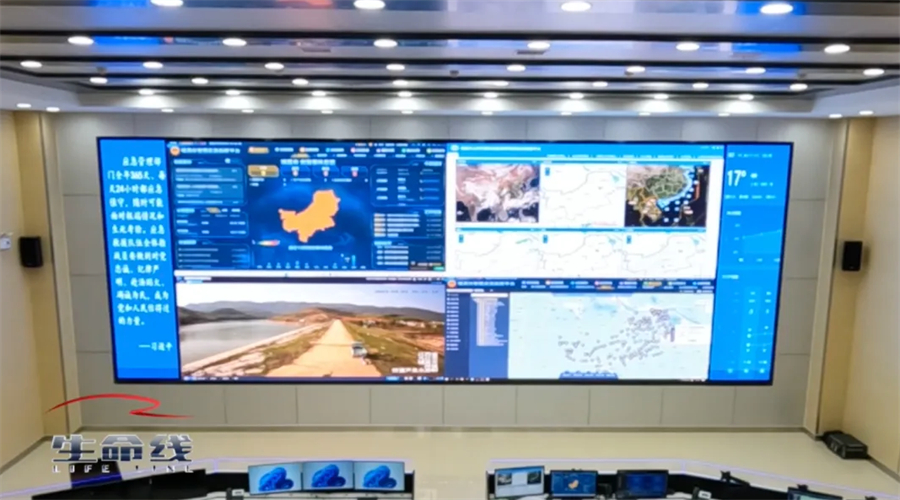
The intelligent emergency command platform established by Ruichang Emergency Management Bureau according to the census data can grasp the dynamic information of every disaster-prone point in the city in real time, and monitor it in real time for 24 hours. Once the front is sensed, it can respond quickly and conveniently. Monitoring probes and infrared virtual railings are installed in 34 key waters in the city. Once someone approaches, they can be persuaded to leave by shouting.
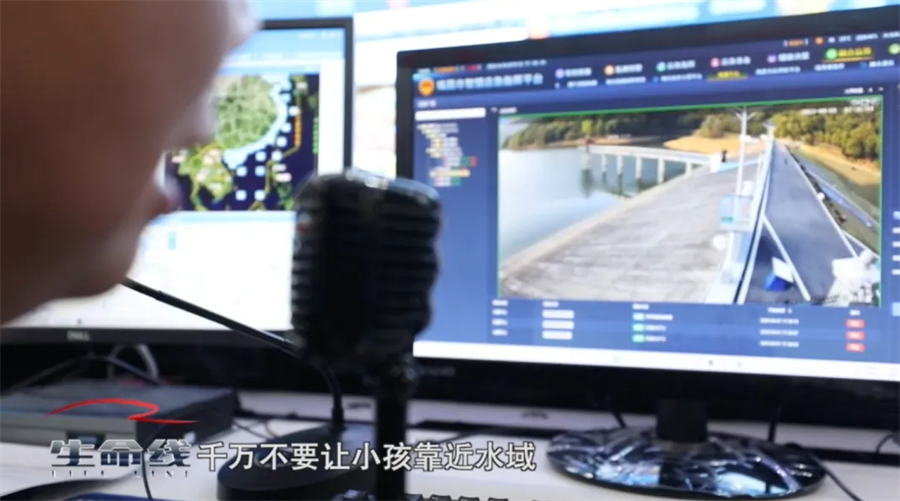
On January 20, 2023, Ruichang Smart Emergency Command Platform issued an alarm, and abnormal temperature appeared in Hongyandong Scenic Area. The induction system quickly captured the fire point and uploaded screenshots to the platform. Hongyandong is a place with steep mountains and dense forests, so it is very difficult to put out the fire. There have been many fires in this place in history, and the shortest fire extinguishing time takes 3 days.
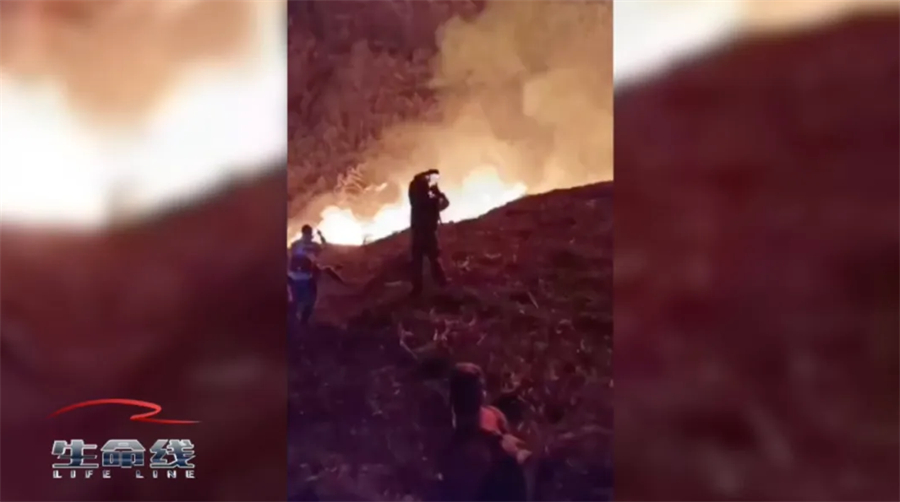
However, in this fire, under the command and dispatch of the intelligent emergency command platform, the fire was put out within ten hours. This efficient response made the local people really feel the sense of security brought by the census data.
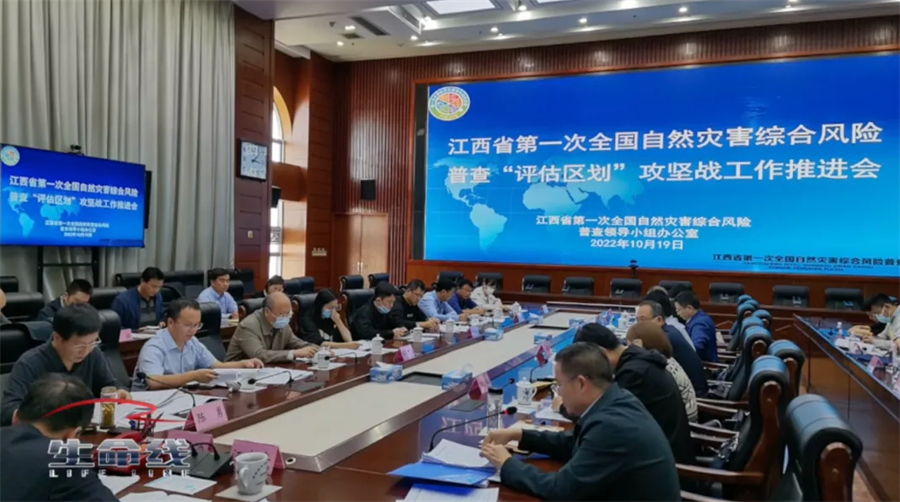
From 2020 to 2023, the first national comprehensive risk survey of natural disasters lasted for three years. In view of 23 kinds of disasters in six categories, such as earthquakes, geology, meteorology, floods and droughts, marine, forest and grassland fires, people’s governments at all levels in provinces, cities and counties set up census leading groups, formulated plans and formed teams, comprehensively found out the hidden danger base of national disasters, identified the disaster resistance ability of key areas, and objectively understood the comprehensive risk level of disasters in the country and regions. The first national comprehensive risk survey of natural disasters has entered the stage of evaluation and zoning, and the data of the future survey will be better applied.

E-commerce back-office system: manage the back-office inventory management (location, allocation, inventory).

Inventory is an unavoidable problem for e-commerce companies, and it is also the life door for e-commerce companies. Problems in supply chain management are often reflected in inventory, either too much inventory leads to slow sales or too little inventory leads to out of stock.

Inventory management, as its name implies, is to manage the quantity of goods. In general, we can divide it into sales inventory and warehouse inventory.

Sales inventory can also be called foreground inventory, which is the inventory quantity facing the user’s latitude.

Warehouse inventory, which can also be called background inventory, is the inventory quantity oriented to warehouse latitude.

Sales inventory and warehouse inventory, the specific details of which we will introduce in later articles.

The most important behaviors that affect warehouse inventory are warehousing and warehousing.

Warehousing refers to how many commodities have been added, such as purchase warehousing, return warehousing, transfer warehousing, production warehousing, inventory warehousing and other warehousing.

Issue refers to how many commodities have been reduced. Common issues include sales issue, purchase return issue, transfer issue, inventory loss issue and other issues.

In order to better explain the contents of goods in and out of the warehouse (inventory management), according to the process, we will first introduce the basic business in the warehouse, including location introduction, allocation business and inventory business.

In order to better manage the goods, warehouses are generally divided into one cargo space. In this way, every time the goods are put into storage, they will be associated with a location, and when the goods are put out of storage, the location of the goods will be associated with the sorting list, so that the warehouse staff can find the location of the goods quickly and efficiently when distributing the goods.

Here is a way to allocate the cargo space, which also provides an idea:

The above picture is a simple plan of the distribution area, which can be divided into several rows. Each row is named A, B, C, D, E, F, G and H, and each row has many shelves. Combined with the naming of each row, we name each shelf A01, A02, A03, A04, A05 and A06.

The above picture shows a simple shelf. This shelf is named A01, which can be divided into four floors. Each floor is named A01-1, A01-2, A01-3 and A01-4. For each cargo space, we name it A01-1-01, A01-1-02 and A01-1-03.

(1) List of cargo positions

The prototype is relatively simple, so I don’t need to describe it too much here. It is just a configuration page and a display list page, which contains the most basic information such as warehouse, location and status.

Transfer is mainly used to adjust the inventory quantity in the warehouse. Putting the right goods in the right warehouse/location can be divided into intra-warehouse transfer and inter-warehouse transfer.

Intra-warehouse transfer: it can also be called location inventory transfer, which is generally the adjustment of the internal inventory of the warehouse. For example, the goods are transferred from the goods with sufficient inventory to the goods with insufficient inventory, which is convenient for picking goods and managing the inventory of the goods.

Inter-warehouse transfer: it can also be called warehouse inventory transfer, which is generally the adjustment of inventory between warehouses. For example, goods are transferred from Hangzhou warehouse to Shanghai warehouse.

The flow of transfer business mainly revolves around the transfer of transfer documents, involving business personnel, transfer-out warehouse and transfer-in warehouse, from the creation of transfer documents by business personnel to the creation of transfer issue documents by transfer information transfer to transfer-out warehouse, and then to the creation of transfer receipt documents by transfer information transfer to transfer-in warehouse.

(1) business personnel, according to the actual demand to create a transfer form, and submit it for approval.

(2) Relevant personnel review the transfer form. If the review fails, they need to re-edit and submit it.

(3) Transfer out the warehouse, and create a transfer issue document according to the approved transfer document. Of course, the transfer issue document can also select one or several commodities in the transfer document according to the actual situation, and fill in the actual issue quantity.

(4) Transfer to the warehouse, create a transfer receipt document according to the transfer document and the issue document, and do the warehousing operation according to the actual situation.

(5) Expenses incurred in the process of financial settlement and allocation

(1) Transfer billing

Transfer billing is the first step of transfer business in the system. First, you need to select the most basic transfer-out warehouse and transfer-in warehouse, and then select the goods that need to be transferred, and the goods will reach sku latitude. The system will calculate the quantity of goods that can be transferred according to the rules (the specific calculation method of the quantity that can be transferred will be introduced later when we introduce the inventory details), maintain the actual quantity of goods transferred this time, and select the transfer-in location (the transfer-in location will read the location information of the corresponding warehouse according to the basic information).

(2) Transfer Sheet Management

All transfer documents are displayed here. Transfer documents need to be approved here before subsequent transfer-out and transfer-in operations can be carried out.

Status of transfer document:

  • Being Edited: equivalent to the draft status, the transfer document can be modified and then submitted for approval.
  • Canceled: the document is cancelled, which means the document has been voided.
  • Pending approval: the transfer application has been submitted, but it has not been approved.
  • Approved: the transfer application has passed, and you can issue it.
  • Pending issue: the transfer issue document has been generated, but it has not been approved.
  • Partial issue: some goods in the transfer document have been issued.
  • Issued: all goods in the transfer document have been issued.
  • Pending receipt: the transfer receipt document has been generated, but it has not been approved.
  • Partial receipt: some goods in the transfer document have been received.
  • Completed: all the goods in the transfer document have been received.

Inventory refers to the total or partial inventory of the physical inventory in the warehouse, so as to truly grasp the goods status during the period, and thus improve and strengthen management.

General invoicing systems provide strict warehousing management, so theoretically, the inventory quantity of the system is consistent with the actual inventory quantity of the warehouse. However, in actual operation, it is inevitable that there will be mistakes and omissions in delivery, or that the process will not be followed. At this time, there will be a mismatch between the theoretical inventory and the actual inventory in the warehouse.

After counting, if the actual inventory data is inconsistent with the theoretical inventory data, an inventory gain receipt document and an inventory loss issue document will be automatically generated to adjust the inventory quantity. Regular inventory not only ensures the accuracy of inventory data, avoids oversold and other phenomena, but also can grasp the problems in inventory operation in time.

Regular inventory not only ensures the accuracy of inventory data, but also can grasp the problems in inventory operation in time and avoid oversold. After counting, if the inventory data are inconsistent, an inventory profit and loss sheet will be generated. The seller can check the inventory changes in the inventory management interface or check the inventory ledger to check what links caused the inventory inaccuracy.

The business mainly focuses on the circulation of inventory sheets, starting from the creation of inventory sheets by business parties, entering inventory, and automatically generating inventory gain receipt documents and inventory loss issue documents to correct the inventory after the inventory is completed.

(1) business personnel, according to the actual demand to create inventory list, and submit it for review.

(2) Relevant personnel shall review the inventory list. If the review fails, it needs to be re-edited and submitted.

(3) the warehouse personnel, according to the inventory list for inventory entry of goods, enter the actual inventory quantity.

(4) According to the comparison between the counting quantity and the inventory quantity, an inventory gain receipt document and an inventory loss issue document are generated.

(5) Relevant personnel review the inventory gain receipt document and inventory loss issue document (if the inventory document personnel are the reviewers, they can be directly approved by default), so as to correct the inventory.

(1) Inventory billing

Inventory billing is the first step of inventory operation, and our inventory process starts here. Inventory billing is mainly used to select inventory warehouse, inventory goods and other information. After clicking Save/Submit for approval, inventory sheets can be generated, and the generated inventory documents can be displayed in the inventory sheet management interface.

(2) Inventory sheet management

It is mainly used to query and manage the inventory list, where we can review the inventory list, enter the inventory and other operations.

Inventory sheet status:

  • Being Edited: equivalent to the draft status, the inventory list can be modified and then submitted for approval.
  • Canceled: the document is cancelled, which means the document has been voided.
  • Pending approval: the inventory application has been submitted, but it has not been approved.
  • To be counted: the counting application has been approved, but it has not been entered yet. You can enter the counting sheet.
  • Completed: the inventory entry is completed and the inventory is finished.

(3) Inventory entry

This is mainly used to enter the real quantity of goods in the inventory list. After the inventory is completed, the business personnel fill in the actual inventory quantity. After saving, the inventory entry process is completed, and the system will follow the new and original inventory data. If the input quantity is inconsistent with the inventory quantity, the system will automatically generate an inventory gain receipt document and an inventory loss issue document.

This paper mainly introduces the basic business in the warehouse, including location introduction, transfer business and inventory counting business. The following articles will introduce the warehousing management and warehousing management that directly affect inventory data. Finally, the details of sales inventory for user latitude and warehouse inventory for warehouse latitude will be introduced as a whole. Welcome all interested parties to communicate together.

E-commerce back-office system: account management in the management back-office (1)

E-commerce background system: managing the security, menu and notification management of background articles (2)

E-commerce back-office system: management of back-office procurement management (executive layer)


Author: Nonsense, WeChat WeChat official account: dianshanghoutai.

This article was originally published by @ nonsense. Everyone is a product manager. Reprinting is prohibited without permission.