Those things that foreign heads of state visit, eat and live: prosperity depends on people’s food to discuss the current situation
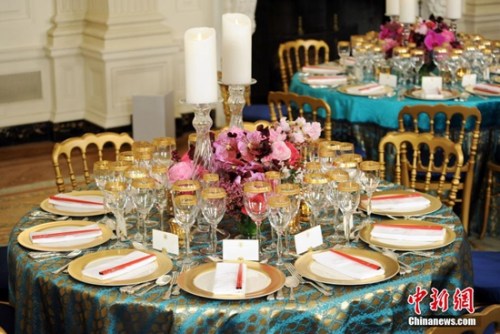
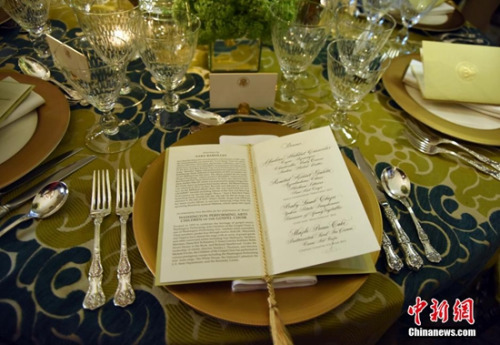
BEIJING, June 9 (Xinhua)-During their visits abroad, leaders of various countries have to deal with their work, and food and shelter are also a major issue that cannot be ignored. How does the visiting country receive it? What are the personal hobbies of leaders? As the saying goes, "diplomacy is no small matter", behind every international event, these behind-the-scenes tidbits are also interesting and meaningful.
Diplomacy on the tip of the tongue: environmental protection becomes a fashion, and the current situation is discussed in food
Gilles Bragar, the founder of Chef Club of Heads of State and a French businessman, once quoted a famous French diplomat talleyrand’s famous saying to Napoleon: "If you give me a good chef, I will return you a good agreement." He pointed out that politics will separate people, but the dining table can bring people together. Thus, the importance of "tongue diplomacy" can also be seen.
In recent years, private dinners between leaders have prevailed. For example, US President Barack Obama’s "Hamburg Diplomacy" to Russian Prime Minister Dmitry Medvedev and Japanese Prime Minister Shinzo Abe’s "Sushi Diplomacy" to entertain Obama, although seemingly relaxed and warm, in fact, both sides are angry at each other, and they are unwilling to give in when negotiating state affairs, and finally they did reach a consensus on some issues.
On the other hand, the dietary preferences of heads of state are also the focus of attention. For example, German Chancellor Angela Merkel is the number one "cheese fan", and the Obamas prefer vegetables and fruits, but Obama himself doesn’t like beets. Queen Elizabeth II is famous for not being picky about food. Russian President Vladimir Putin will not relax his security when enjoying delicious food. It is said that there will be special agents to try the dishes.
In addition, although it is generally believed that banquets for leaders are usually prepared exquisitely and the materials are exquisite, at a recent UN luncheon, the meals for leaders of various countries used the parts of the ingredients that are often discarded as waste. For example, hamburgers made from the residue after squeezing vegetable juice, French fries made from corn flour used as animal feed, etc., to remind high-level officials in various countries to put an end to waste and advocate environmental protection.
The highest-end "sleeping party": abundance and frugality are sought after after by people.
In addition to eating, there are many doorways for leaders’ accommodation. For example, in May this year, Japan held the Group of Seven (G7) Summit, and the main venue was located at the Shima Tourist Hotel in Xiandao, Shima City, Mie Prefecture. In order to entertain heads of state and add points to his foreign policy, Prime Minister Shinzo Abe carried "Japanese elements" everywhere during the meeting and launched a fierce propaganda offensive.
After the meeting, the reception hotel also launched an "experience package" for the accommodation of the leaders, so that visitors can also feel the treatment of a leader. For example, French President Hollande stayed in the top new royal suite of the hotel, which covers an area of 210 square meters and costs 216,000 yen (about 13,200 yuan) for one night.
US President Barack Obama stayed for two nights in the second-ranked Royal Suite with 96 square meters and a night of 178,200 yen (about 11,000 yuan). Although these rooms are very expensive, it is said that many tourists who come here are willing to spend a lot of money to try them.
Unlike Abe’s lavish style, the G8 Summit in 2012 was much more "simple". At that time, the leaders attending the summit were arranged to live in various holiday "huts" that were "not luxurious" at Camp David in the United States. However, although they all live in "huts", the leaders are treated differently in view of their closeness to the host country, the United States.
For example, as the prime minister of Britain, a close ally of the United States, Cameron can enjoy the VIP room "Maple Leaf Cabin", while European Commission President Barroso and European Council President Van Rompuy have to share a "cabin". Although the meeting itself did not make obvious substantive progress, it was exposed to such obvious "differential treatment", which made this matter once a hot topic outside.