The Golden Week of the Eleventh National Day set off a red tourism upsurge to celebrate the birthday of new China by experiencing red culture.
Shanghai, China, October 9 (Xinhua) According to China Voice, the Central Radio and Television General Station, this year marks the 71st anniversary of the founding of New China. The traditional Mid-Autumn Festival meets the National Day, making the Eleventh Golden Week "expanded" to eight days. In this golden week holiday, many places across the country set off a red tourism boom, and many tourists chose to travel in red and experience red culture to celebrate the birthday of new China.
The first stop of today’s red tour, we came to Jinggangshan, Jiangxi. Jinggangshan is the cradle of China’s revolution. During the Mid-Autumn National Day this year, it also ushered in the peak of tourists this year. What are the highlights of red tourism in Jinggangshan, the revolutionary holy land? How is the red culture passed down in Jinggangshan?
Jinggangshan is located in the southwest of Jiangxi Province, in the middle of Luoxiao Mountain at the junction of Hunan and Jiangxi provinces. Jinggangshan Scenic Area is the first batch of national key scenic spots announced by the State Council in 1982, and it is also one of the top 100 patriotic education demonstration bases and the top ten excellent social education bases in China. Jinggangshan brings together revolutionary cultural landscape and charming natural scenery. There are more than 60 scenic spots and more than 320 scenic spots in the scenic spot.
Li Haiqing, an excellent red tour guide in Jiangxi Province, said that the most eye-catching background color of Jinggangshan is undoubtedly red. Up to now, there are more than 100 well-preserved revolutionary sites in Jinggangshan, 26 of which are listed as national key cultural relics protection units, and are known as the "cradle of China revolution" and "the cornerstone of People’s Republic of China (PRC)", which is the Communist Party of China (CPC)’s eternal spiritual home.
Li Haiqing: Jinggangshan is a revolutionary mountain, a heroic mountain and a glorious mountain. Welcome to Jinggangshan, the cradle of revolution. In 1927, Mao Zedong, Zhu De and other proletarians of the older generation led the Chinese revolutionary army of workers and peasants into Jinggangshan, where they created the first rural revolutionary base.
From the Xiaping exit of Jinggangshan Taijing Expressway, a giant red flag sculpture with a height of 19.27 meters and a span of 27 meters stands at the foot of Jinggangshan Mountain, where many tourists punch in as a souvenir. The overall shape of the sculpture is a red flag flying high, and the five-pointed star, sickle and axe and the word "Jinggangshan" are inlaid in the middle, which is very eye-catching. Li Haiqing said that this magnificent "Jinggang Red Flag" sculpture has multiple meanings.
Li Haiqing: First of all, it is like a huge stone that can’t stand. It is the cornerstone of People’s Republic of China (PRC). It is like a flaming flame, and the spark of the China revolution started a prairie fire from here; The red flag is located in the towering mountains, stabbing into the sky, which shows that the China revolution is moving from Jinggangshan to victory.
Take a bus from the foot of the mountain and hover along the winding mountain road, and you will arrive at Jinggangshan Revolutionary Martyrs Cemetery in the Central Scenic Area of Ciping, Jinggangshan in half an hour. The Martyrs Cemetery is built in memory of the older generation of proletarian revolutionaries and many unknown martyrs. The whole building faces south, covering an area of 26.68 hectares, including the cemetery gate, memorial hall, forest of steles, statue garden and monument.
Li Haiqing: We climbed the stairs, and we came to the memorial hall. First of all, we can see that on the wall of white marble, there are six bronzing characters of "Long live the martyrs". 93 years ago, in the arduous struggle of Jinggangshan for two years and four months, we sacrificed more than 48,000 revolutionary martyrs and forged the great Jinggangshan spirit with our youth and blood.
On September 30th, the seventh National Martyrs’ Day, nearly a thousand cadres and people from Jinggangshan City came to Jinggangshan Revolutionary Martyrs Cemetery to pay tribute to the Monument to the Unknown Soldier, and presented flower baskets to the people’s heroes to express their feelings of remembrance.
Not far from the martyrs cemetery, a building with a sense of time is very conspicuous. It is the Jinggangshan Revolutionary Museum. The whole museum collects more than 30,000 cultural relics and more than 7,000 documents. Collect thousands of rare works of Mo Bao, the party and state leaders, famous painters and celebrities from all walks of life; Hundreds of film and television information pieces such as Mao Zedong and Zhu De’s return to Jinggangshan have been preserved. Jinggangshan Revolutionary Museum is the first local revolutionary history museum in China, which is responsible for carrying forward Jinggangshan spirit, publicizing the history of Jinggangshan revolutionary struggle, and protecting, managing and repairing the former residence site of Jinggangshan Revolutionary Memorial.
Li Haiqing: We are now at the Jinggangshan Revolutionary Museum. As you can see, the logo of the museum was specially inscribed by Zhu Junchang of Zhu De when he returned to Jinggangshan at the age of 76 on March 4, 1962. On display in the museum are Zhu De’s shoulder pole, I-shaped silver dollar, the first pledge of joining the Party by party member, the earliest farmer we found, and a jar of salt preserved by Li Shangfa, a farmer distributed by the Red Army.
Humming "The Lights of the Octagonal Building", the reporter followed the tour guide to the Mao Ping Scenic Area in Mao Ping Township on the west side of Jinggangshan. There is a very famous house with a very ordinary appearance. The faint light from this house once lit up the future of Jinggangshan base area.
Li Haiqing: In Mao Ping, Jinggangshan, there is a residential building with a history of nearly 200 years. It is called octagonal building because it has an octagonal skylight inside. From 1927 to 1929, Comrade Mao Zedong lived in the octagonal building. Under the dim light, he drafted two brilliant works: Why the Red Regime in China Can Exist and The Struggle in Jinggangshan. He dismissed the question of "How long will the red flag last?" Questions.
This well-known "Xijiang Moon Jinggangshan" describes the classic battle of Jinggangshan-the Battle of Huang Yangjie. Huang Yangjie is located 17 kilometers to the northwest of Ciping, and the top of Huang Yangjie is 1343 meters above sea level. There are many peaks and steep terrain here. The battle of defending Huang Yangjie, which happened here, created a classic example of winning more with fewer, and kept the red revolutionary flame.
Li Haiqing: On August 30th, 1928, a famous battle of Huang Yangjie took place here. With less than a battalion of troops, the Red Army United with the effective forces on the mountain and won the battle of winning more with less and stronger scenic spots with weaker ones. If you want to ask why they can win more with fewer people, it is because the Communist Party of China (CPC) people came to Jinggangshan and carried out the agrarian revolution here, which solved the fundamental problems of who fought for and who carried guns.
If tourists are not satisfied with the traditional sightseeing tour, the tour guide in Li Haiqing will mainly recommend the large-scale live-action Jinggangshan, which is the largest red live-action drama in Jiangxi. The performance venue is located in the landscape theater of 100,000 square meters in the urban area. More than 600 actors who participated in the performance are mostly farmers from nearby Nashan Township and Xiaping Town, and their ancestors were the Red Army of that year. The modern sound and photoelectric technology at the scene made the audience present immersive, as if they had experienced the years of blood and fire in Jinggangshan revolutionary base more than 90 years ago.
In Bashang Village, Mao Ping Township, Jinggangshan, a red scene experience class-"A Day of the Red Army" is going on. Students dressed in Red Army uniforms retraced the Red Army’s grain-picking trail, shouldered ammunition boxes, found landmarks according to maps, recognized herbs, carried stretchers, cooked a Red Army meal by themselves, went deep into farmers to conduct social surveys, and experienced the Red Army’s day in an immersive way. This class impressed Mr. Tang, a student.
In order to welcome the Mid-Autumn Festival and celebrate the National Day, "Our Festival-Mid-Autumn Festival" will be held in Ciping Scenic Area of Jinggangshan from October 1 ST to 7 th, inviting tourists to sing red songs to celebrate the two festivals. Jinggangshan Cultural Center organized a red literary light cavalry unit to come to the nursing home to send festive greetings and blessings to the elderly.
If Jinggangshan is the cradle of revolution, Shanghai is the birthplace of the Communist Party of China (CPC). When it comes to the red blood of Shanghai, a modern city, most people will think of the site of the First Congress of the Communist Party of China. The site of the First Congress of the Communist Party of China is a typical Shikumen building, which was built in the autumn of 1920. It is located at No.106 Wangzhi Road, Shanghai French Concession, which is now No.76 Xingye Road, Shanghai. On July 23rd, 1921, the First Congress of the Communist Party of China was held here. Thirteen representatives from seven early organizations in communist party and two representatives from the Comintern attended the meeting. On the evening of July 30th, the meeting was harassed by the French Concession and could not be held in Shanghai. The last meeting was transferred to a cruise ship in Nanhu, Jiaxing, Zhejiang. The Congress adopted the Party’s program and working resolutions, elected the central leading organs, and declared the formal establishment of the Communist Party of China (CPC). The face of China’s revolution has taken on a new look.
In fact, in addition to a large conference site, there are many buildings with red historical veins in Shanghai. Nowadays, with the changes of the times, some of them have even become the "online celebrity" punching places that are deeply loved by young people. What little-known historical stories have happened here? How does the old building give new vitality in generate?
Measuring a city with footsteps is the best way to know it. Next, we will continue to set out, walk the streets of Shanghai together, listen to the "old story" under the buttonwood tree, and get to know a different Shanghai again-
In the green space of Xujiahui Park, which is surrounded by flowers and trees, next to hengshan road, stands a small building with red tiles and red bricks. There is a stone tablet in the flower bed in front of the foreign building, and the words "Little Red House" are written impressively. This is the former site of the once famous "One Hundred Generations Little Red House".
In 1921, EMI established "Oriental EMI Record Company" in Shanghai. In this small red building with Dutch architectural style, the first recording studio in Shanghai was built, which was one of the best recording studios in China at that time, which created the history of Chinese record production and gave birth to countless famous songs and stars. Many superstars at that time appeared here, such as Mei Lanfang, Nie Er, Xi Xinghai, Zhou Xuan, Zhao Dan, Wang Renmei and so on.
In 1935, March of the Volunteers, the theme song of Shanghai Dentsu Film Company’s film Children of the Storm, was produced here. Therefore, the "Little Red Chamber" is also known as the recording place of the national anthem.
Wang Renmei, who once starred in "Children of the Storm", lives in a room on the seventh floor of Wukang Building at the junction of Huaihai Road and Wu Kang Road, and Qin Yi, a famous performing artist who won the "Republic Medal", once lived here.
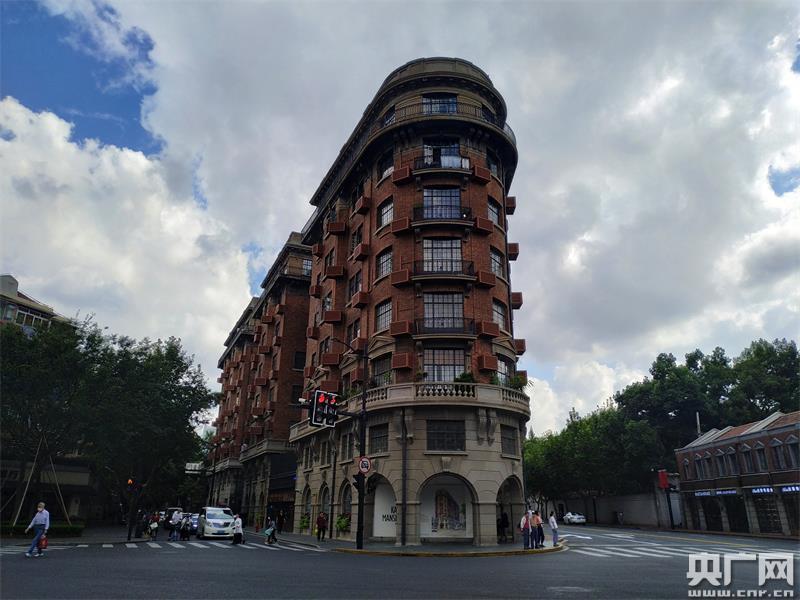
Wukang Building (photo by Yang Guangwang reporter Lin Yushe)
Commentator Xiao Guo told reporters that Wukang Building is a typical French Renaissance building. This apartment building was invested and built by French merchant Universal Savings Association in 1924, and designed by Hungarian designer Hudak. It is like a huge ship waiting to sail, magnificent and a landmark building on Wu Kang Road. Formerly called Normandy Apartment, it is the earliest veranda apartment building in Shanghai.
Guo: What exactly is this veranda for? If friends look at the gate, they can see that there is an elevator in our Wukang building, and there is an elevator on the eighth floor. Then the outer corridor is a special elevator, and you have to walk through the corridor to enter every household.
Today, this old apartment building, which has been with Shanghai for more than 90 years, has become a new building in online celebrity.
Guo: And why do people like the whole building so much now? Because from the facade, the building can be appreciated in three sections, the first floor and the second floor. In this section, it has an arcade with an arch hole, and at the same time, it is displayed with cement imitation stone on the surface. Some decorations attached to it have a concrete representative of Renaissance style, and you can see the specific decorations when you go out. Then, the third to seventh floors are the blocking of the whole building, which is also a very plain paragraph. It uses clear red bricks. The veranda can be displayed mainly on the 3rd to 7th floors here. At the same time, on the 3rd floor, he has a railing and a decoration for going out. This triangular square decoration is to tell everyone what kind of modeling mode was popular in Shanghai at that time. On the eighth floor and the seventh floor, after it was finished, it recreated an eaves. On the eighth floor, he was highlighting an eave, that is, the eaves of wrought iron railings. It can be said that there are three views on a building, and this volume is relatively rare in Shanghai.
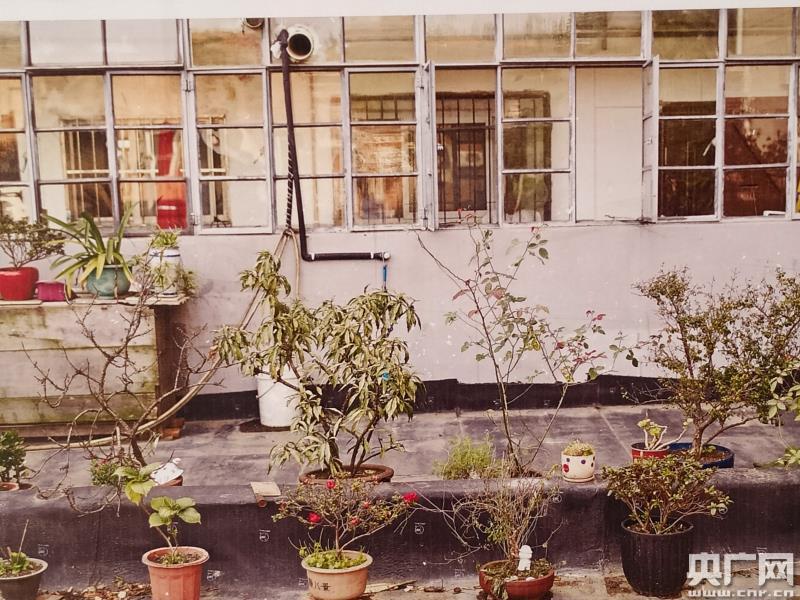
Interior of Wukang Building (photo by Yang Guangwang reporter Lin Yushe)
In September 2019, the Wukang Building completed protective renovation. The construction idea of repairing the old as before makes the style of this classic building in Shanghai reappear in front of the world.
With the completion of the pole-closing renovation and the overhead line underground project, there is no longer a cobweb-like power grid line in front of Wukang Building. Without obstacles and shelter, across the street from Wukang Building and on the sidewalk at the gate of Xinya Dabao, there are always many citizens who raise their mobile phones and punch in to take pictures, and even attract many foreign tourists to come to Shanghai to take pictures in front of the building.
Yao Jiayin, deputy general manager of Shanghai Hengfu Investment Co., Ltd.: Wukang Building has been renovated by our Xufang Group for more than a year, that is, it was completely renovated at the end of September last year, and then its new look was exposed to everyone. It’s a new look, but in fact it’s still the same. Because it is almost the same before and after repair, people don’t even think it has been repaired, which is a feeling of pursuing repairing the old. Now, since the completion of the repair, Wukang Building has become a must-see for all tourists, and everyone likes to come here to see its whole picture. We can see that every street corner is full of people, and everyone wants to take a full picture of him. From May this year until now, we have been continuously launching various urban micro-tours, and hope that more people can join the team that can read our buildings.
Along Huaihai Middle Road to Fuxing Middle Road, there is a 96-year-old apartment with the same name as Wukang Building. It is the "Blackstone Apartment" located at 1331 Fuxing Middle Road. "Blackstone Apartment" was built in 1924. It was also called "Citi Apartment" in the early days. It is an eclectic building with baroque characteristics.
The investor of "Blackstone Apartment" is an American missionary with Chinese name "Song Reasonable". At the beginning of its construction, it appeared in public view as a "hotel", and its advanced and luxurious facilities once amazed people at that time. In addition to the kitchen, bathroom and refrigerator, the apartment is also equipped with a four-season heated swimming pool, restaurant, ballroom, tennis court, elevator, central heating, servant service and even a foreign housekeeper.
Today, Blackstone Apartment has been renovated and developed. Apart from the coffee bookstore, it also includes a hotel and a lecture hall where concerts will be held in the future, which echoes with the Shanghai Symphony Orchestra across the road to form a music-themed block.
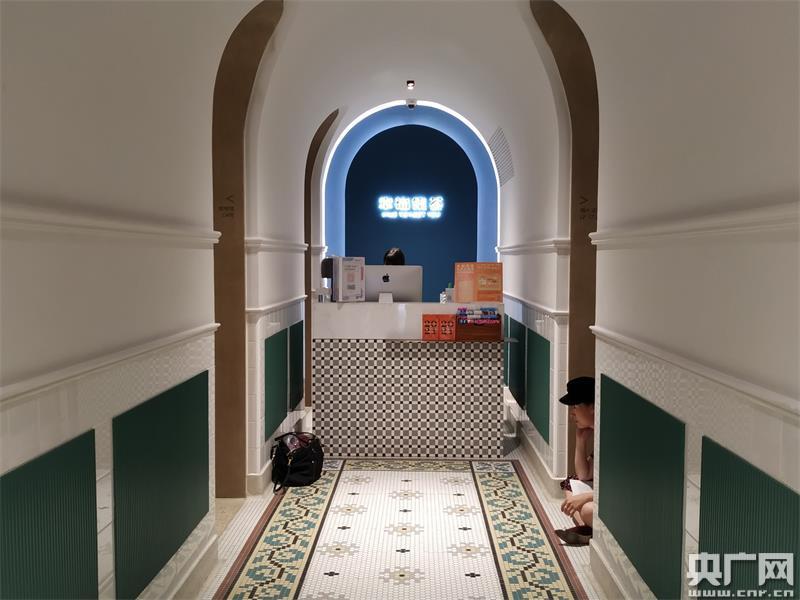
Happiness Gathering Interior (photo by Yang Guangwang reporter Lin Yushe)
Wu Pan, director of Happiness Collection Bookstore: What is more distinctive is that our record audio-visual room will have a lot of vinyl (records). We have audio equipment here, and (enthusiasts) will also come to audition. We have a today’s audition record over there every day, and we will change all three records. Then different music types, from traditional classical music to some vinyl records of popular bands now. I have seen customers before. We have chairs here, and just two people have been sitting here for a long time. We can read books related to music and then listen to music. (Reporter Xie Yuansen, Li Xian, Chen Yubin, Yang Jing, Lin Biao)
Reporting/feedback